Philosophy
Sergey Yemelin · A personal worldview
Philosophy
How I see the world, and what shapes that view.
Books and essays I write, ideas I’m exploring, and books, films and music I return to. A place to share my thinking and the things that have helped shape it.
Books
English & Russian editionsBoth books are undergoing editorial review and fact-checking ahead of publication. English and Russian editions are planned. Reading and purchases will become available when the books are ready.

Within
Coming soonEnglish & Russian
About the book
The atoms in a human body have a history that began long before the body existed. Between the early universe and an ordinary moment of human life lie stars, chemical elements, water, cells and countless changes of form. Within follows those connections, asking how the knowledge scattered across different fields can become a coherent picture of the world we inhabit.
The account begins with philosophical questions about existence, difference and relation, then moves through the formation of matter, the lives of stars and the conditions that make life possible. Physics, chemistry and biology become parts of a connected account: how structures arise, how they persist, and how a living organism comes to sense and respond to its surroundings.
As the account approaches human experience, the questions become personal. What makes a self? Where does one person end and another begin? How can freedom be understood in a world of causes? What do connection, responsibility and mortality mean for someone who is themselves part of the process they are trying to understand?
Sergey Yemelin brings these questions together in accessible language, with illustrations and a distinction between scientific findings, philosophical arguments and his own hypotheses. The uncertain parts remain open to revision. Dark matter, the smallest structure of space, subjective experience and the future of thinking machines mark places where an account of reality still meets unanswered questions.
Within is written for readers who want to connect what they know about the universe with the fact of being alive inside it. Its central invitation is to examine the picture as a whole: where the connections hold, where an argument needs more support, and what might change when we learn more.

The Story of a Glance
Coming soonEnglish & Russian
About the book
An eye can look out from an ancient object, a religious image, a state emblem or a camera above a shop door. We may recognise the shape instantly, yet its meaning changes with the people who made it and those who encounter it. The Story of a Glance begins with that familiarity and the unsettling feeling that even a drawn eye can seem to look back.
Sergey Yemelin follows the eye through objects and practices across history: shell eyes set into ancient faces, Egyptian amulets, protective symbols, images used in worship, and the eye placed within a triangle. The search asks who made each object, what it was used for, and what people understood it to do. Similar forms invite comparison, while their different histories resist a single explanation.
The inquiry moves from sacred and protective images to the authority of seeing. State symbols, photography, surveillance and recognition technologies raise questions about who gets to look, what a record can reveal, and how a person can be reduced to an image or a category. Being seen can offer recognition and care; it can also expose someone to judgement and control.
Another part of the story takes place in the body. How do eyes and brains produce the world we experience? Why do we notice faces and watching eyes so quickly? What can attention miss? Chapters on light and quantum experiments examine what observation means in physics, alongside the very different experience of a person seeing and interpreting something.
A personal narrative runs through these inquiries. Childhood memories, years spent photographing faces and the effort to understand his own responses bring the author back to ordinary encounters. The question gradually shifts from what an eye symbol means to what happens when we give another person our attention.
Illustrated and written for a general reader, the book brings history, religious traditions, neuroscience and physics into a reflective account of looking. Its title also names a personal story: how one person’s view changes as familiar images become harder to take for granted, and as looking more carefully becomes a way of living.
Provisional cover concepts. Final covers and publication details will be shared here.
Essays
Thoughts that need more roomWriting about the questions, experiences and encounters that shape my view of the world.
· Essay
A Just World
Justice is not a law of nature. It is a fragile human attempt to restrain the law of the jungle.
Read essayIdeas
In preparationQuestions, working notes and possibilities I’m still thinking through. This section will open when the first notes are ready to share.
My shelf
Books, writers, films & playlistsBooks I love, a writer I return to, and things I’d like to share.
The Dhammapada and Hawking’s illustrated history of time are my two standouts. Tao Te Ching is another firm favourite.
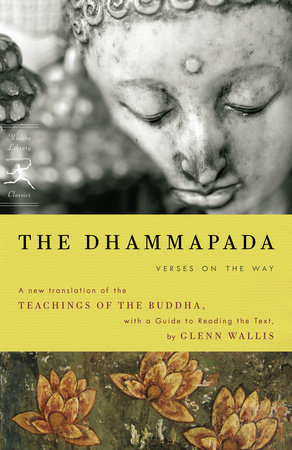
The Dhammapada
Verses on attention, conduct and the mind, drawn from early Buddhist teachings.

The Illustrated A Brief History of Time
An illustrated introduction to space, time, black holes and the universe’s origins.

Tao Te Ching
Short passages on the Way, simplicity and acting without forcing.
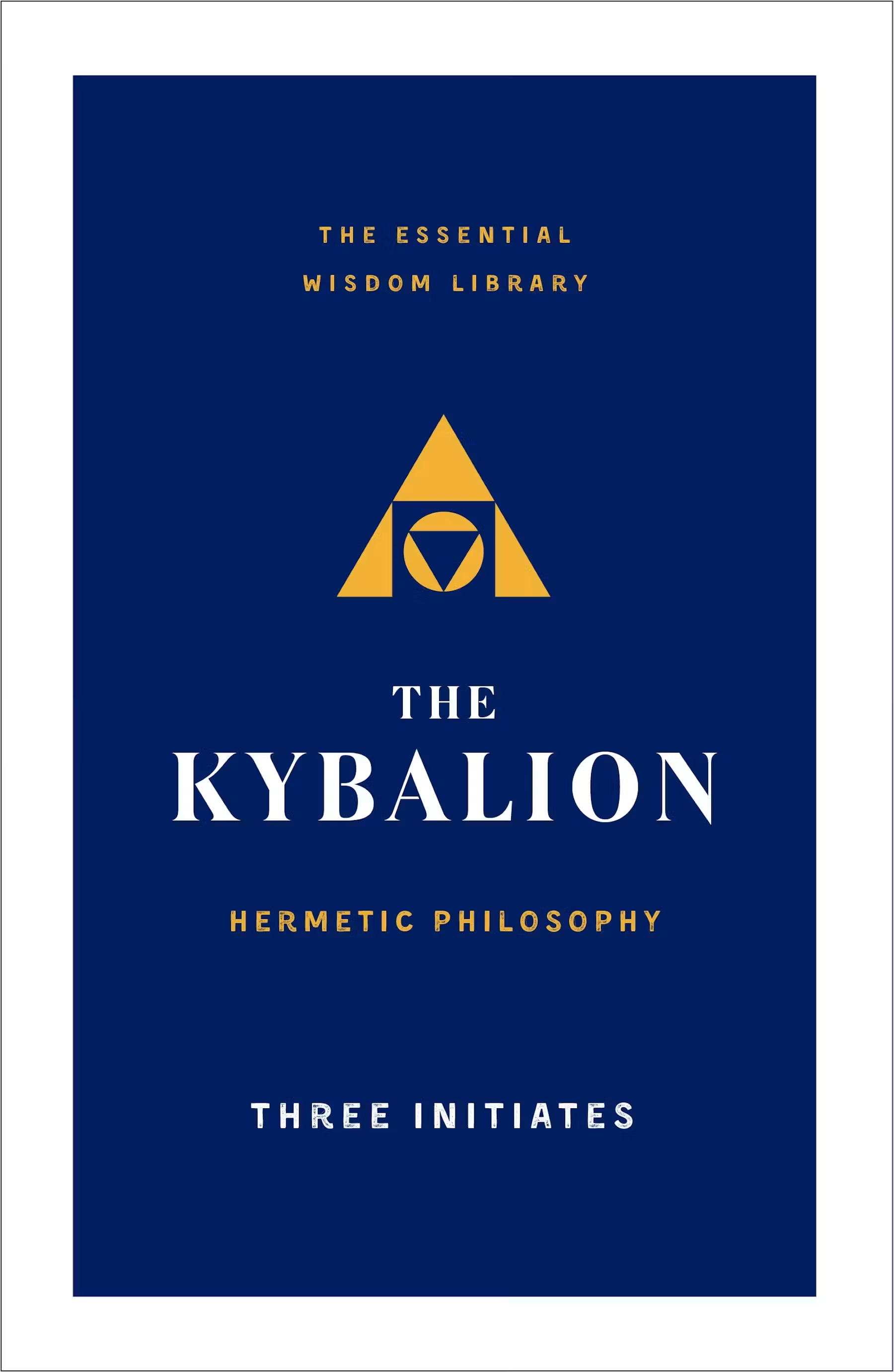
The Kybalion
Seven esoteric principles presented as a modern interpretation of Hermetic philosophy.

Surely You’re Joking, Mr. Feynman!
Curiosity, experiments and mischievous stories from a physicist’s life.

The Upanishads
Ancient Indian dialogues exploring the self, reality and liberation.
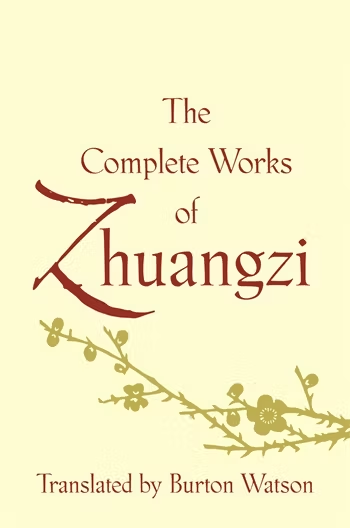
Zhuangzi
Parables and paradoxes that unsettle fixed ideas about identity and the world.

The Art of Color
How colours interact, create contrast and shape what we see.

1984
Surveillance, power and the struggle to preserve truth and independent thought.
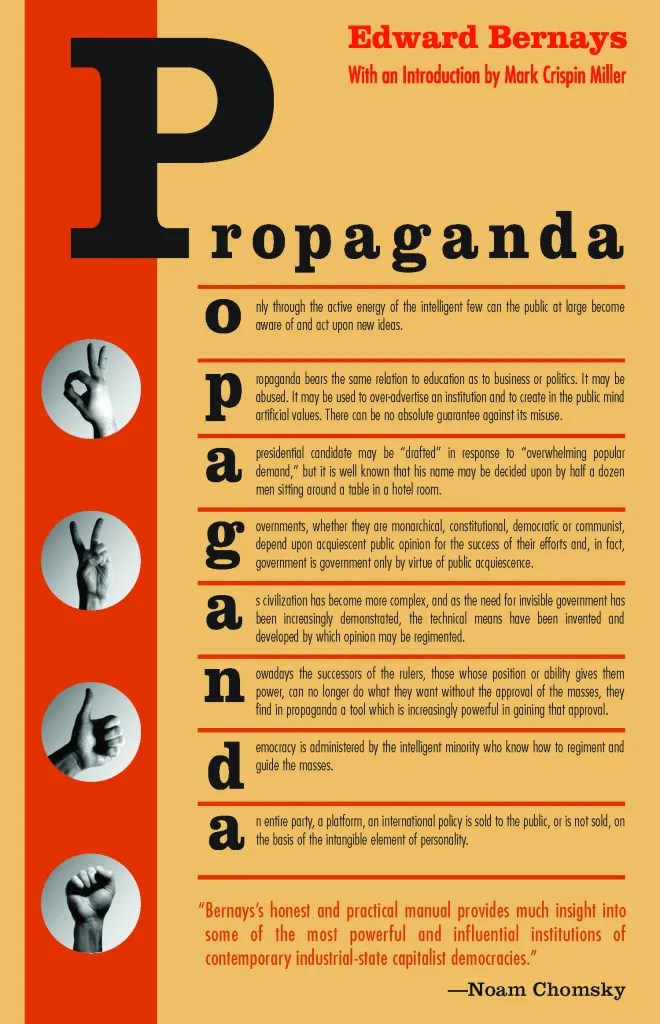
Propaganda
An account of how institutions shape public opinion through organised persuasion.
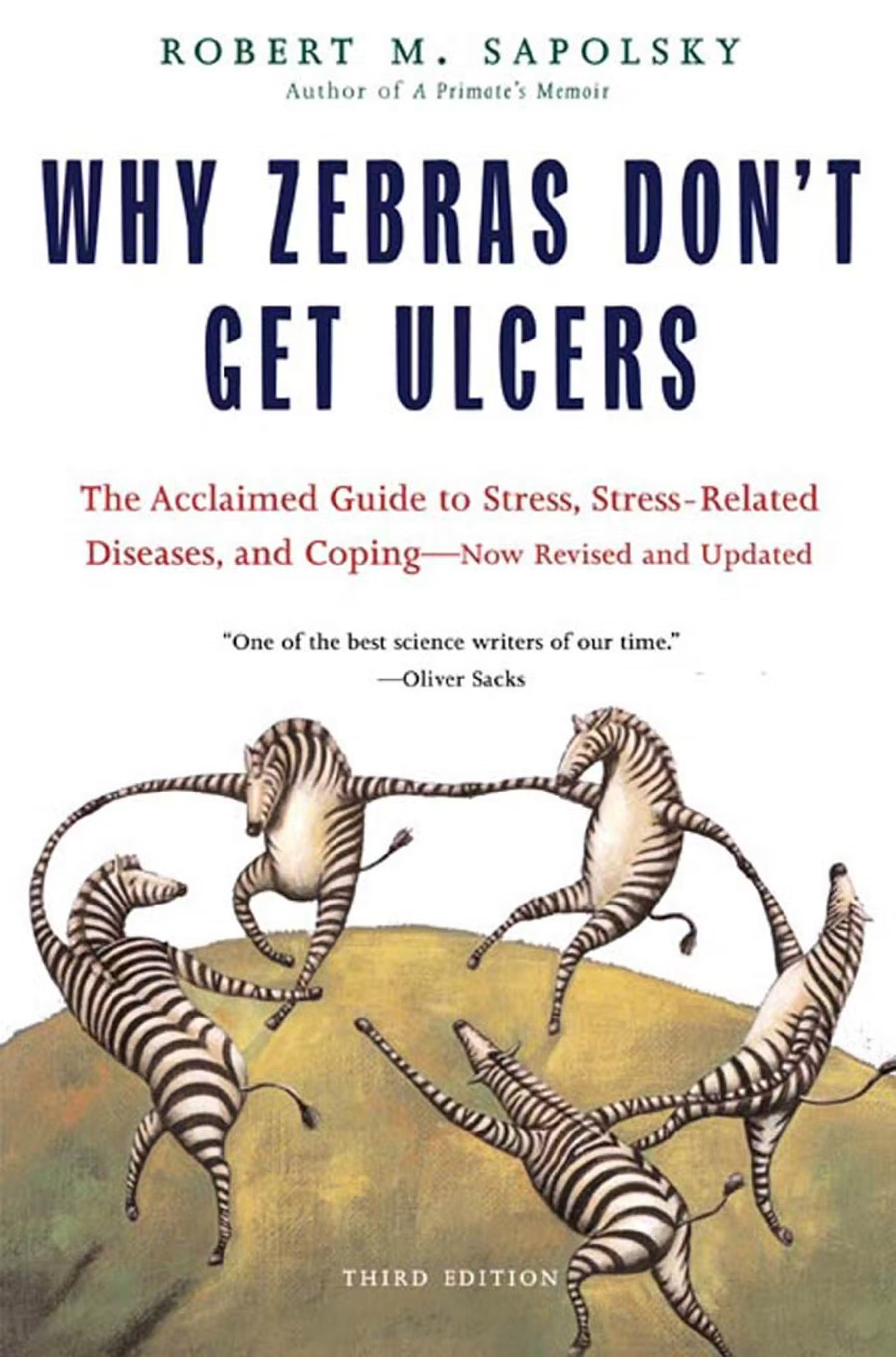
Why Zebras Don’t Get Ulcers
How prolonged stress affects the body, and why humans sustain it.
Jiddu Krishnamurti
Self-understanding, attention and freedom from conditioned thought.
Explore his teachingsFilms
My film selections are being prepared.
Playlists
My personal Spotify playlists will appear here.